Balayage: how it differs from highlights, upkeep, how often to come back

Balayage is a much sought-after lightening technique, and one of the most misunderstood. It gets confused with highlights, mistaken for a colour, believed to need no upkeep. This guide explains what it is, what sets it apart, which shade to choose on brown hair, what it costs the hair, how to look after it and how often to come back.
What does balayage mean?
The word comes from the French verb balayer, to sweep: the hairdresser applies the lightening product with a brush, freehand, in strokes that “sweep” the surface of the hair. There is no cap and no regular grid. The result aims for a blended effect, lighter towards the ends, like hair lightened by the sun.
Balayage is therefore first and foremost a lightening technique, not an all-over dye: it removes colour from certain strands instead of depositing it over the whole head, most often by one or two shades. A toner is often applied afterwards, to give the lightened strands the desired tone, golden, beige or cool.
What is the difference between balayage and highlights?
Classic highlights are sections of hair isolated in aluminium foil and lightened from root to tip, following a regular pattern. Balayage is applied freehand, without foil, more irregularly. Highlights give a clean, marked lightening; balayage gives a softer gradient.
| Balayage | Classic highlights | |
|---|---|---|
| Application | with a brush, freehand | sections isolated in foil |
| Starting point | often set back from the root | at the root |
| Finish | blended, graduated | regular, more contrasted |
| Regrowth | discreet | visible as a clean line |
The two techniques can be combined: many hairdressers place a few fine highlights around the face and balayage on the rest. Ombré, for its part, is a bolder gradient: the root stays dark and the ends become noticeably lighter.
What is the difference between balayage and colouring?
Colouring deposits pigments over the whole head of hair to change its shade, cover grey hair or go darker. Balayage removes pigments from some of the strands to lighten them. The first changes the overall colour; the second creates contrasts of light on the existing colour.
The two are often combined: a root colour to cover grey hair, then balayage to brighten the lengths. In that case, it is the root colour that sets the rhythm of appointments, more than the balayage.
Which balayage suits brown or black hair?
On a brown or black base, warm shades close to the natural colour give the most natural result: caramel, honey, hazelnut, chocolate. They require little lightening. A very light blonde or an ash shade is still possible, but the hair has to be lightened further, often over several sessions, and it tolerates this less well.
There is a reason for this: when dark hair is lightened, warm, coppery or orange tones show through first. To get a cool or ash tone, the hair has to be lightened further, then those tones neutralised with a toner, which fades with washing. On brown hair, the easiest balayage to wear is therefore one that stays within a few shades of the base.
What are the drawbacks of balayage?
Balayage weakens the hair, since it lightens it. It takes time at the salon, a higher budget than a simple colour, and upkeep: lightened strands dry out faster and their tone shifts with washing and the sun. On a very dark base, several sessions may be needed.
The American Academy of Dermatology sums it up as follows: many treatments that enhance the appearance of hair can also damage it, and lightening by more than three shades requires a stronger developer, which causes more damage. It recommends staying within three shades of your natural colour. Beyond that, the result is still possible, but the hair pays more for it.
Another point to know: hair dyes and some toners can cause reactions. The UK’s National Health Service (NHS) states that many permanent hair dyes, and some semi-permanent ones, contain PPD, a substance known to irritate the skin or cause allergic reactions. Mention any past reaction before the appointment.
How do you look after balayage?
Balayage is looked after with treatments that nourish the lightened lengths, protection from the sun and a toner redone from time to time to revive the tone. The sun is its first enemy: according to the American Academy of Dermatology, it makes hair weak, dry, rough, faded and brittle.
- Day to day: a gentle shampoo and a conditioning treatment on the lengths at every wash.
- In the sun: a wide-brimmed hat, the advice dermatologists give for coloured hair.
- Between two balayages: a toner, or gloss, when the tone turns yellow or dull.
- With heat: limit irons and straighteners on lengths that are already weakened.
Smoothing is often added to balayage: what it does to the hair is explained in our guide hair botox, smoothing and keratin.
How long between appointments?
Balayage is redone less often than a colour: it starts back from the root, and regrowth does not draw a clean line. Hair salon chains often mention a touch-up at the salon roughly every three months, a ballpark figure rather than a rule. In the meantime, a toner revives the tone of the strands, which is the first thing to wear off.
The exact rhythm depends on the gap between your natural colour and the strands, how fast your hair grows and your habits. If your roots are coloured to cover grey hair, they will set the calendar. Your hairdresser will tell you after the first appointment.
What is an Olaplex treatment for with balayage?
Olaplex is a range of hair treatments, two steps of which are reserved for salons. According to its manufacturer, No. 1 is added to the lightening product, without changing its formula, to protect the hair during the technique; No. 2 is applied at the basin, right afterwards. It describes an action on the internal bonds of the hair, which bleaching weakens.
Such a treatment replaces neither an assessment before the technique nor upkeep at home. At Vernal, the Olaplex treatment is on the menu at 450 dh.
How much does balayage cost at Vernal?
At Vernal, the natural “sun kissed” balayage starts at 1,500 dh and the Vernal signature balayage at 2,000 dh. The final price depends on the length and thickness of the hair, the gap between your base and the result you want, and any added treatments, such as a toner or an Olaplex treatment.
| Service at Vernal | Price |
|---|---|
| Natural “sun kissed” balayage | from 1,500 dh |
| Vernal signature balayage | from 2,000 dh |
| Classic technical highlights | from 1,000 dh |
| Face-framing light contouring | from 1,200 dh |
| Gloss / Illuminating toner | 600 dh |
| Olaplex treatment | 450 dh |
Up-to-date prices on the Hair styling, balayage & hair care page.
Having balayage at Vernal, in Tangier
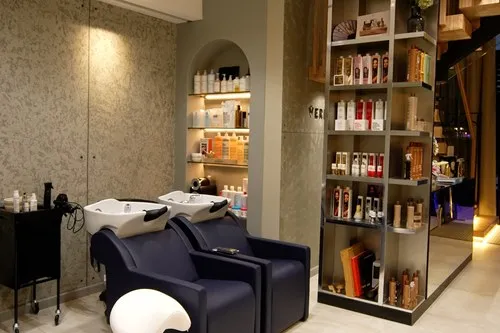
Vernal is a holistic beauty centre located on Route de l’Abattoir in Tangier. A complimentary camera assessment of the hair and scalp comes with any technical service or treatment, balayage included. After the technique, the menu offers deep treatments, including Olaplex and the Oribe rituals. The centre is open Monday to Saturday, from 10 am to 8 pm.
Frequently asked questions
Caramel or honey balayage: what is the difference?
Both are balayages with warm, golden tones. Caramel is deeper and more amber: it is applied on a brown or chestnut base without lightening it much. Honey is lighter and brighter, so it requires slightly more lightening. The choice depends on your starting colour and the contrast you want.
Does balayage damage the hair?
Any lightening weakens the hair, and all the more so when the gap with the original colour is large. The American Academy of Dermatology points out that lightening by more than three shades requires a stronger developer, which causes more damage. An assessment before the technique and care afterwards are the basic precautions.
Does balayage hide grey hair?
It blends grey hair in when there is little of it: the big hair salon chains in fact reserve their balayages for heads of hair with little grey. When there is a lot, it is a root colour that covers it, and balayage brightens the lengths afterwards. Root regrowth then sets the rhythm of appointments.
Do you need an allergy test before colouring?
The UK's National Health Service (NHS) advises testing the dye on a strand of hair at least 48 hours beforehand, and avoiding products containing PPD if you have already reacted to a hair dye or to a black henna tattoo. A reaction can appear up to 72 hours later. At the slightest sign, wash your hair and scalp immediately with a mild shampoo; swelling of the lips or throat, or difficulty breathing, is an emergency.