Hair extensions: application methods, how long they last and how to care for them

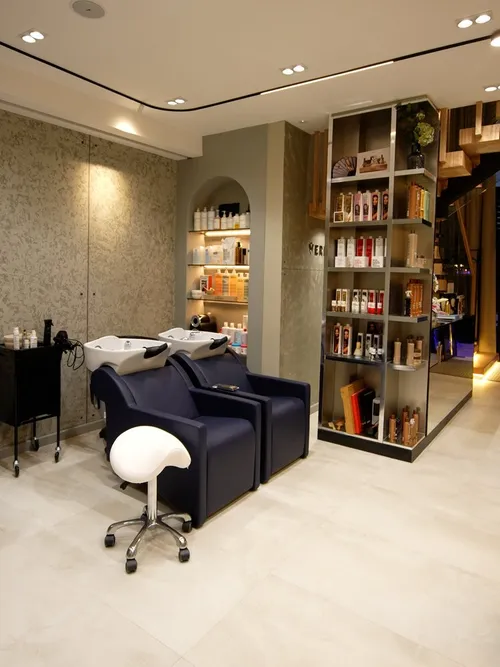
Extensions add length, volume or colour without cutting or colouring your own hair. Some clip in and come out whenever you like, others stay attached for several weeks; they are made of human hair or synthetic fibre. Here are the types of application, how long they last, the risks for your hair, care and price.
What is a hair extension?
A hair extension is a strand of hair, human or synthetic, added to your own hair to lengthen it, thicken it or change its colour. French-language Wikipedia defines it as a false strand “added to a person’s hairstyle”. A 2016 dermatology review on ways to camouflage hair loss describes strands attached to existing hair with glue, braids, sewing or clips.
The extension does not attach to the scalp: it hooks onto your hair, which carries its weight.
Natural or synthetic hair: what is the difference?
Human hair looks like your own hair, can be heat-styled and coloured, but costs more and needs more care; synthetic fibre costs much less, but tolerates heat poorly, cannot be coloured and wears out faster.
Human hair mostly comes from India, according to French-language Wikipedia, where some of it is offered in temples during a ritual head shave; other hair comes from Vietnam or China. Its quality varies widely:
- when the hairs in a batch are mixed, with roots and tips pointing different ways, their scales catch against each other and the strand tangles, explains English-language Wikipedia;
- to avoid this, some manufacturers remove these scales in an acid bath, then coat the hair with a shiny film. French-language Wikipedia considers hair whose cuticle has been dissolved in acid to be porous and of lower quality.
Synthetic fibres contain no human hair, English-language Wikipedia points out. They are quickly damaged by friction and heat, and their quality varies widely: some stay stiff and do not move like hair. Curling irons, straighteners and hot combs should not be used on most of them; some newer fibres tolerate heat.
The 2016 review compares the two materials in relation to wigs; extensions are made of the same human or synthetic hair:
| Human hair | Synthetic fibre | |
|---|---|---|
| Appearance | natural, moves like your hair | sometimes less natural to the touch and in movement |
| Styling | can be styled like natural hair | tolerates heat poorly |
| Colour | can be coloured | cannot be coloured |
| Weight | sometimes heavier, which can cause itching | sometimes lighter |
| Care | more care and styling | easy day-to-day care |
| Price and lifespan | more expensive, last longer | cheaper, need replacing more often |
What are the different hair extension methods?
The main methods are clip-ins, tape-ins, keratin (hot method), micro rings and thread-in strands (cold methods), weaves and halos. French-language Wikipedia describes them as follows:
| Method | How it holds | Good to know |
|---|---|---|
| Clip-in | small clips that snap onto the hair | removable; take out before shampooing |
| Tape-in | two strips a few centimetres long, already lined with hair, stuck on either side of a thin strand | fixed method |
| Keratin | hot method: heated tongs fuse a keratin strand to a strand of your hair | fixed method, strand by strand |
| Micro rings | cold method: a strand of your hair and an extension strand pass through a small metal ring, clamped shut with pliers | fixed method, strand by strand |
| Thread-in strands | cold method: the strand is tied to your hair with an elastic thread the colour of your hair | fixed method |
| Weave | braids flat against the scalp, onto which wefts of hair are sewn | fixed method; the braids must not be tight |
| Halo (headband) | a band held by a nylon thread or an elastic | mainly to add volume to fine hair |
Clip-in extensions come out whenever you like; glued, fused, clamped or sewn methods stay in place until they are removed. For a weave, dermatologists at the American Academy of Dermatology (AAD) prefer sewn-in wefts to glued-in wefts.
How long do hair extensions last?
A fixed application is generally redone every six to eight weeks, according to Wella Professionals, and AAD dermatologists advise not wearing extensions for more than two or three months in a row. Clip-in extensions, for their part, are removed before every wash.
- Maintenance. Fixed extensions grow out with your hair and gradually move away from the root; left in too long, they hang and break. Hence the move-ups recommended by Wella Professionals: removing the extensions and putting them back close to the root.
- The break. After two or three months, the AAD advises switching to a hairstyle without extensions to let your hair rest.
- The material. Synthetic fibres wear out faster than human hair and are replaced more often.
Do hair extensions damage your hair?
Not necessarily, but they pull on your hair: that is what can damage it, if precautions are lacking, warn AAD dermatologists. Repeated pulling on the root can cause hair loss called traction alopecia. The AAD lists extensions and weaves among the hairstyles that encourage it when they are too tight, especially on relaxed hair. DermNet, the New Zealand dermatology resource, adds the weight of very long hair.
At first, the hair loss leaves no scar. If the pulling continues, it destroys the follicles, from which hair grows, and the loss becomes permanent. The 2016 review cites the case of four women who had small red hairless patches at the attachment points of their extensions. Caught early, the hair loss is not necessarily permanent: in most cases, the hair should grow back, notes Wella Professionals.
According to the brand, one of the main causes of breakage is hair too weak to carry the weight of the extensions: it advises checking before application that your hair can bear it and, if you have just given birth, waiting until the hair shedding that may follow is over.
Extensions can also irritate the skin:
- glues. Regarding wigs, the 2016 review reports that the adhesives used to attach them, such as acrylates, can cause contact dermatitis (eczema). Glued methods and tape-ins also use adhesives: report any reaction;
- synthetic fibres. A case series published in 2021 describes ten women, all with atopy (a predisposition to eczema and allergies), who had developed patches of eczema on the neck, where the ends of their synthetic extensions rubbed. The lesions cleared once the extensions were removed and the skin treated. For the authors, people with atopy are more exposed to this irritation.
What signs mean extensions should be loosened or removed?
During application, pain or a headache means it is too tight, warns the AAD: ask for the area to be loosened. Afterwards, have them removed without delay if they hurt or irritate the scalp, especially if you notice:
- pain where the hair is pulled;
- tingling or crusting on the scalp;
- scalp skin lifted by the pulling, like a little tent.
If you wear extensions or hairstyles that pull, the AAD advises checking every month: broken hairs around the forehead, a receding hairline, hairless patches where the hair is pulled. DermNet also lists itching, redness, scaling, pimples around the hairs and many short broken hairs.
In that case, see a dermatologist early: the hair loss can also have another cause, such as stress or heredity, and traction alopecia can become permanent if it is not treated. When the skin becomes smooth and shiny, with no hair, the hair no longer grows back.
How do you care for hair extensions?
Well cared for, extensions pull less on your hair: prepare it before application, wash and detangle in small sections, protect it at night and keep up with your move-up appointments.
Before application, according to the AAD:
- prepare your hair: clean, free of hairspray build-up, moisturised with conditioner. Keep up this routine during and between applications; our dry hair guide covers it in detail;
- have your extensions applied by a professional, and mention any pain during application.
When washing
- Wash your hair as often as its type requires, with a gentle, moisturising shampoo and conditioner, and take clip-in extensions out beforehand (AAD).
- Wella Professionals advises working shampoo into the scalp in small sections, then rinsing thoroughly, without skipping shampoo or conditioner for fear of pulling on the roots: clean hair stays healthy hair.
When detangling and at night, according to Wella Professionals:
- start at the ends, in small sections, and work gradually up to the root;
- with strand-by-strand extensions (keratin, micro rings), separate the bonds with your fingertips every day, row by row, so they do not tangle together;
- for sleeping, tie your hair in a low, loose ponytail, or a braid, with a silk scrunchie; a silk pillowcase is gentler on extensions and on your hair alike.
When styling
- On the very fragile little hairs around the hairline, use only water-based gels, moisturise them with conditioner and avoid heated tools as much as possible (AAD).
- On synthetic extensions, no heated tools unless the manufacturer says otherwise. On human hair extensions, the right heat settings are in our blow-dry guide.
What does a hair extension cost in Tangier?
At Vernal, a beauty centre on Route de l’Abattoir in Tangier, the Hair extension service is from 70 dh (hair menu, Signature blow-dry & styling section). Human hair costs much more than synthetic fibre: when booking, ask what this price covers for what you have in mind.
The menu states that the complimentary hair camera diagnosis (scalp, hair fibre, density and needs) is included with any technical service or treatment. Ask whether it comes with your application.
The full menu is on the Hair styling, balayage & hair care page.
Frequently asked questions
Can extensions be straightened, curled or coloured?
It depends on the material. A 2016 dermatology review, which compares the two materials for wigs, notes that human hair can be styled like natural hair and can be coloured, whereas synthetic fibres cannot be coloured and tolerate heat poorly. English-language Wikipedia specifies that a curling iron or straightener should never be used on most synthetic fibres; Futura, a fibre designed to withstand heat, cannot be coloured either.
Can extensions be applied to fine hair?
It depends on how strong it is: first check that it can bear the weight. According to Wella Professionals, hair too weak to carry it is one of the main causes of breakage and hair loss with extensions, and DermNet points out that the weight of very long hair can, on its own, pull on the roots.
Does hair grow back after extensions?
In most cases, yes, according to Wella Professionals, especially if the breakage is in the lengths. If the pulling has gone on long enough to destroy the follicles, the loss is permanent: when the skin becomes smooth and shiny, the hair no longer grows back, warns the American Academy of Dermatology. That is why it pays to see a dermatologist at the first signs.
How much do hair extensions cost in Morocco?
It depends in particular on the hair applied: human hair costs much more than synthetic fibre. At Vernal, in Tangier, the hair menu lists the Hair extension service from 70 dh; when booking, ask what this price covers for what you have in mind.