
Spa pedicure: the steps, the difference with a medical pedicure, how often to have one

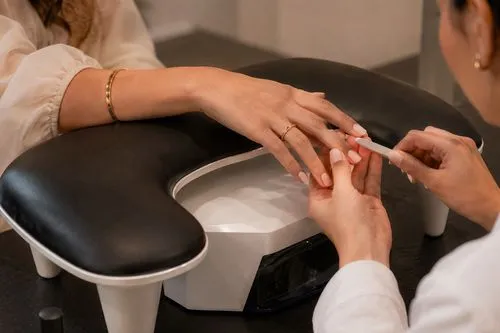
A spa pedicure is a beauty treatment for the feet: a soak, a scrub, removal of dry skin, nail trimming, a massage, and polish if you wish. It is done at a beauty centre. It does not play the same role as a medical pedicure, which treats foot conditions at a podiatrist’s. This guide explains what the treatment includes, what it does not treat, how often to repeat it and the precautions that matter.
What is a pedicure?
A pedicure is a treatment for the feet and toenails. The word refers to two different things: a beauty treatment, done at a beauty centre, which cleans, softens and beautifies the feet; and a medical treatment, done by a podiatrist, which treats corns, ingrown nails or fungal infections. The first looks after appearance, the second a condition.
The confusion also comes from vocabulary. In France, the foot health professional’s official title is “pédicure-podologue”, and people commonly say they are “going to the pédicure” when they go to see one. At a beauty centre, people rather speak of “having a pedicure”, just as they have a manicure.
How does a spa pedicure go?
A spa pedicure generally follows five stages: a foot soak that softens the skin, a scrub, smoothing of thickened skin with a foot file or a pumice stone, trimming and filing of the nails, then a massage of the foot and lower leg with a moisturising cream. The polish comes at the end, as an option.
Generally, it is this care time, scrub, massage and sometimes a mask, that sets a spa pedicure apart from a simple pedicure, which focuses on the nails. The exact content changes from one beauty centre to another: ask what is included before booking.
A few gestures make the difference between a treatment done well and a risky one:
- toenails are cut straight, without rounding the corners, to prevent them from becoming ingrown;
- dry skin is smoothed with a foot file or a pumice stone, never cut with a razor;
- cuticles are gently pushed back, not cut;
- the feet are dried thoroughly, between the toes included, before the cream and the polish.
What is the difference between a spa pedicure and a medical pedicure?
A spa pedicure is a beauty treatment: it maintains healthy feet. A medical pedicure is a health treatment, carried out by a podiatrist with sterilised instruments: it treats corns, thick calluses, ingrown nails, fungal infections and warts. A beauty centre does not treat these problems.
| Spa pedicure | Medical pedicure | |
|---|---|---|
| Who does it | a beautician, a nail technician | a podiatrist |
| Where | at a beauty centre or a spa | in a practice |
| What for | soft feet, neat nails, a moment of relaxation | foot pain or a foot condition |
| What it includes | soak, scrub, smoothing of dry skin, trimming, massage, polish | care of corns and calluses, ingrown nail, fungal infection, wart |
Book an appointment with a podiatrist rather than at a beauty centre if you have:
- a nail that digs into the skin, red or painful;
- a thick, yellow or crumbling nail;
- a corn or a callus that hurts when you walk;
- a wart on the sole of the foot;
- diabetes or poor circulation in the legs.
What is the difference between a manicure and a pedicure?
A manicure looks after the hands and fingernails, a pedicure the feet and toenails. The gestures are similar, but a pedicure adds work on the heels and thickened skin, and toenails are cut straight. The tools are never used for both: bacteria and fungi pass from the feet to the hands.
Toenails also grow much more slowly. A study published in 2010 in the journal of the European Academy of Dermatology and Venereology, carried out on 22 young American adults, measured an average of 1.62 mm per month for a toenail, against 3.47 mm for a fingernail. Polish applied on the feet therefore shows its regrowth later than on the hands.
For the choice of application, classic polish, gel polish or BIAB, the differences are the same as on the hands: they are detailed in our article on Russian manicure, BIAB and gel polish.
How often should you have a pedicure?
There is no medical frequency: the right rhythm depends on how fast the nails grow, the condition of the skin on the heels and the application chosen. With polish, it is the regrowth at the base of the nail that decides the next appointment; without polish, it is the skin becoming dry and thick again.
Between two appointments, a few habits extend the effect of the treatment: a moisturising cream on the soles and heels, feet dried thoroughly between the toes after the shower, and nails trimmed straight again if needed. Remove a polish that chips rather than scraping it off. If a nail changes in appearance under the polish, leave it bare and show it to a podiatrist.
What precautions should you take before and during a pedicure?
The main risk of a pedicure is infection, from the foot bath water or from poorly cleaned instruments. The precautions are simple: do not shave your legs before the treatment, do not come with a wound on the foot, check that the foot bath is disinfected between two clients and that the instruments are sterilised, refuse the razor.
The risk linked to the foot bath is not theoretical. In 2000, in California, 110 clients of the same salon developed boils on their legs, caused by a mycobacterium that was found in all ten of the salon’s whirlpool foot baths. The investigation, published in 2002 in the New England Journal of Medicine, showed that shaving the legs before the pedicure clearly increased the risk.
The American association of podiatrists adds other advice:
- do not let anyone remove dead skin with a razor: used badly, it damages the skin for a long time and can infect it;
- do not let anyone cut the cuticles, which protect the nail from bacteria;
- do not clean under the nails with a pointed tool;
- do not share files, which cannot be sterilised: they must be new for each client;
- do not cover with polish a thick or discoloured nail, which can be a sign of a fungal infection.
Redness, pain or a spot that does not heal on the foot or leg in the days or weeks following a pedicure should be shown to a doctor, mentioning the treatment.
How much does a spa pedicure cost at Vernal?
At Vernal, in Tangier, a regular pedicure costs 200 dh and a spa pedicure 300 dh, or 350 dh in the special spa version. With a gel polish application, the pedicure costs 400 dh; with BIAB, 500 dh with Semilac or Manucurist and 600 dh with Core.
| Treatment at Vernal | Price |
|---|---|
| Regular pedicure | 200 dh |
| Spa pedicure | 300 dh |
| Special spa pedicure | 350 dh |
| Pedicure with gel polish | 400 dh |
| Pedicure with BIAB Semilac / Manucurist | 500 dh |
| Pedicure with BIAB Core | 600 dh |
Up-to-date prices, manicure included, on the Manicure, pedicure & nails page.
Having a pedicure at Vernal, in Tangier
Vernal, a holistic beauty centre on Route de l’Abattoir in Tangier, offers spa pedicures from 300 dh, and pedicures with gel polish or BIAB from 400 dh to 600 dh. The centre is open Monday to Saturday, from 10 am to 8 pm.
Before the treatment, mention any diabetes, wound, painful nail or fungal infection: in these cases, the pedicure waits for a podiatrist’s opinion.
Frequently asked questions
What do you call the person who does a pedicure?
At a beauty centre, it is a beautician or a nail technician: she gives the feet a beauty treatment. The health professional who treats the feet is the podiatrist. In France, the official title of that professional is "pédicure-podologue", which keeps the two jobs confused.
Should you shave your legs before a pedicure?
No. The American association of podiatrists advises against it: freshly shaved skin or small cuts let the bacteria in the foot bath water get in. During an outbreak of infections linked to a Californian salon, shaving the legs before the pedicure was one of the risk factors.
Can you have a pedicure if you are diabetic?
Ask your podiatrist or your doctor first. With diabetes or poor circulation, a small wound on the foot heals badly and can become infected. The American association of podiatrists recommends having a podiatrist define a suitable treatment, which the beauty centre will then follow.
Can you have a pedicure with an ingrown nail or a fungal infection?
No, not at a beauty centre. An ingrown nail, a thick and discoloured nail that suggests a fungal infection, a painful corn or a wart are a matter for the podiatrist. Polish applied on a diseased nail hides the problem without treating it: have it treated before going back to applications.
Which application damages toenails the least?
No medical source ranks applications. The simplest remains classic polish: it comes off with nail polish remover, with no file or lamp. Gel polish and BIAB last longer, but go under the lamp and are removed at a beauty centre, never peeled off. Their differences are detailed in our article on Russian manicure, BIAB and gel polish.
